Embryo donation is possible across multiple European countries, with costs generally between €1,500 and €6,000 and waiting times ranging from 3 to 24 months, depending on phenotype matching and embryo origin. This treatment involves transferring surplus day-5 blastocysts created during another patient’s IVF cycle or during double-donor programs to a new recipient. Age limits, anonymity rules, and waiting times vary by country.
Many patients who qualify for the so-called embryo donation seek this type of treatment abroad. The most important reasons are the availability of embryos for adoption in the patient’s country (waiting time) and the costs of such a procedure.
- Embryo donation in Europe – Availability & Costs – Summary
- Embryo donation in Europe: Country comparison
- Embryo donation costs
- Embryo donation – Popular destinations
- Embryo donation in Spain
- Embryo donation in the Czech Republic
- Embryo donation in Greece
- Embryo donation in North Cyprus
- Embryo donation in Portugal
- Embryo donation in Latvia
- Donated Embryos – Availability
- What is embryo donation?
- Why embryos become available for donation?
- Where do embryos for adoption come from?
- Embryo donation or double donation?
- Embryo donation abroad – The process
- What happens if the embryo does not survive thawing?
- Questions to ask before choosing a clinic for embryo donation
- Embryo donation in Europe – FAQ
- Which European countries allow embryo donation?
- How much does embryo donation cost in Europe?
- Which country allows embryo donation over 50?
- Is embryo donation anonymous in Europe?
- Can a single woman receive embryo donation?
- Is embryo donation cheaper than double donation?
- Article sources:
Embryo donation in Europe – Availability & Costs – Summary
Embryo donation is available in several European countries, including Spain, Greece, Czechia, Portugal and Latvia, but the legal framework is not the same in each destination.
The main differences concern:
- maximum treatment age
- whether donors are anonymous or identifiable
- whether single women can receive treatment
- how donated embryos become available
- and the price charged by individual fertility clinics
Spain and Greece offer some of the broadest access, while Czechia has stricter relationship and age requirements. Portugal differs significantly on donor identity because donor-conceived adults can request identifying information.
Find Top Embryo Donation Clinics AbroadEmbryo donation in Europe: Country comparison
| Country | Approx. embryo donation cost | Maximum female age | Single women | Donor identity |
|---|---|---|---|---|
| Spain | €3,000–€5,000 | No fixed statutory maximum | Yes | Anonymous |
| Greece | €3,500–€6,000 | 54 | Yes | Anonymous or identifiable options |
| Czechia | €2,000–€3,500 | 49 | No | Anonymous |
| Portugal | €2,000–€3,000 | 50 | Yes | Identity may be requested by donor-conceived adults |
| Latvia | €4,000–€4,500 | No fixed statutory maximum | Yes | Anonymous |
Embryo donation costs
The costs of embryos available for adoption offered by clinics vary between countries and also among clinics within a country. In Europe, it can be assumed that embryo donation costs range from €1,500 to €5,000.
Typically, the least expensive embryos are those obtained from patients’ own eggs during their treatment. The waiting time for such embryos in most countries can average from 3 to 24 months. The waiting period depends primarily on the recipient’s characteristics (height, eye color, hair color, hair type, and skin complexion) because embryos are matched according to the recipient’s phenotype. So, if the desired embryo is not available, the recipient must wait until a similar couple or patient is treated at the clinic and decides to donate their embryos to the bank.
The most expensive are embryos obtained through the so-called Double Donation programs, because in such a program, the clinic incurs costs related to egg donation (donor compensation) and the costs associated with fertilizing the oocytes with donor sperm (from a sperm bank).
Find Top Embryo Donation Clinics AbroadEmbryo donation – Popular destinations
Most clinics in popular countries where patients go for IVF treatment offer embryo donation in various forms. Remember that embryo donation is a type of IVF treatment, so patients are subject to the rules and restrictions in force in a given country-for example, the maximum age of the female patient and the maximum number of embryos to transfer during one cycle.
Embryo donation in Spain
In Spain, there are many clinics that offer treatment to patients from abroad-particularly in Madrid, Barcelona, Alicante, Valencia, and Bilbao-and most of them offer donated embryos. The cost of embryo donation in Spain ranges from €3,000 to €5,000. The maximum age for a woman who can benefit from embryo donation is 50 years, although some clinics allow treatment for patients up to 54 years old. In clinics that perform a large number of cycles, the waiting time for embryos can be shorter-below 6 months; in some cases, it can even be up to 12 months.
Donated embryos in Spain are anonymous.
Check which clinics offer embryo donation in Spain >
Embryo donation in the Czech Republic
The Czech Republic is a popular country chosen by many patients not only from Europe. Most clinics offer embryo donation at prices ranging from €2,000 to €3,500. The maximum age of the female patient is 49 years. Single women cannot receive treatment in the Czech Republic. The waiting period for embryos varies depending on the clinic; it can be from 3 up to even 12 months.
Donated embryos in the Czech Republic are anonymous.
Check which clinics offer embryo donation in the Czech Republic >
Embryo donation in Greece
In Greece, the most popular IVF clinics offering embryo donation are located in Athens and Thessaloniki. The average cost of embryo donation in Greece is around €3,500 to €6,000. In Greece, patients up to 54 years of age can benefit from embryo donation.
Donated embryos in Greece are anonymous.
Check which clinics offer embryo donation in Greece >
Embryo donation in North Cyprus
North Cyprus is a frequently chosen country for IVF treatment and egg donation. However, the costs of embryo donation, ranging between €5,500 and €6,000, are among the highest in Europe, which leads many patients to opt for other, less expensive countries. Nevertheless, North Cyprus offers a high availability of donated embryos and a relatively short waiting time, and clinics accept patients up to 48 years old. Therefore, for older patients and those who are pressed for time, North Cyprus may be worth considering. The availability of donated embryos can vary between clinics.
Donated embryos in North Cyprus are anonymous.
Check which clinics offer embryo donation in North Cyprus >
Embryo donation in Portugal
Portugal is one of the few countries often chosen by international patients that offers non-anonymous egg donation-the egg donor remains anonymous to the recipient, but the child born can learn the identity of the donor. The same rule applies to embryo donation. In Portugal, embryo donation costs between €2,000 and €3,000. The maximum age of a female patient who can undergo treatment in Portugal is 50 years.
Check which clinics offer embryo donation in Portugal >
Embryo donation in Latvia
Latvia is one of the few countries where, according to the law, there is no maximum age limit for female patients who can be treated in IVF clinics. Most clinics assess patients on an individual basis. The costs of embryo donation in Latvia range from €4,000 to €4,500. Embryo donation in Latvia is anonymous.
Check which clinics offer embryo donation in Latvia >
Donated Embryos – Availability
The availability of embryos intended for adoption is limited because a large group of patients who enter the IVF program will have a limited number of embryos, which they use exclusively during their own treatment. A small group of patients have surplus embryos, which they decide to donate to an embryo bank.
Best Countries for IVF Revealed
Popular countries, costs, success rates, legal frameworks and availability in one comprehensive 100-page guide. 10K+ downloads
Best Countries for IVF Revealed
Popular countries, costs, success rates, legal frameworks and availability in one comprehensive 100-page guide. 10K+ downloads
Find the Right IVF Clinic Abroad
Get personalised clinic suggestions, cost clarity, donor options and next-step guidance before you contact clinics.
IVF Clinics Directory
Carefully selected clinics based on patients' reviews and clinics’ experience.
Compare IVF Packages Costs
Explore comprehensive IVF packages that include treatment costs, additional services, and special offers.
In most countries, the transfer of an embryo, in accordance with the guidelines of international infertility organizations, should occur after matching it to the phenotypic characteristics of the recipient or couple intending to adopt such an embryo.
You may be interested in reading: Egg Donation IVF abroad – step by step
What is embryo donation?
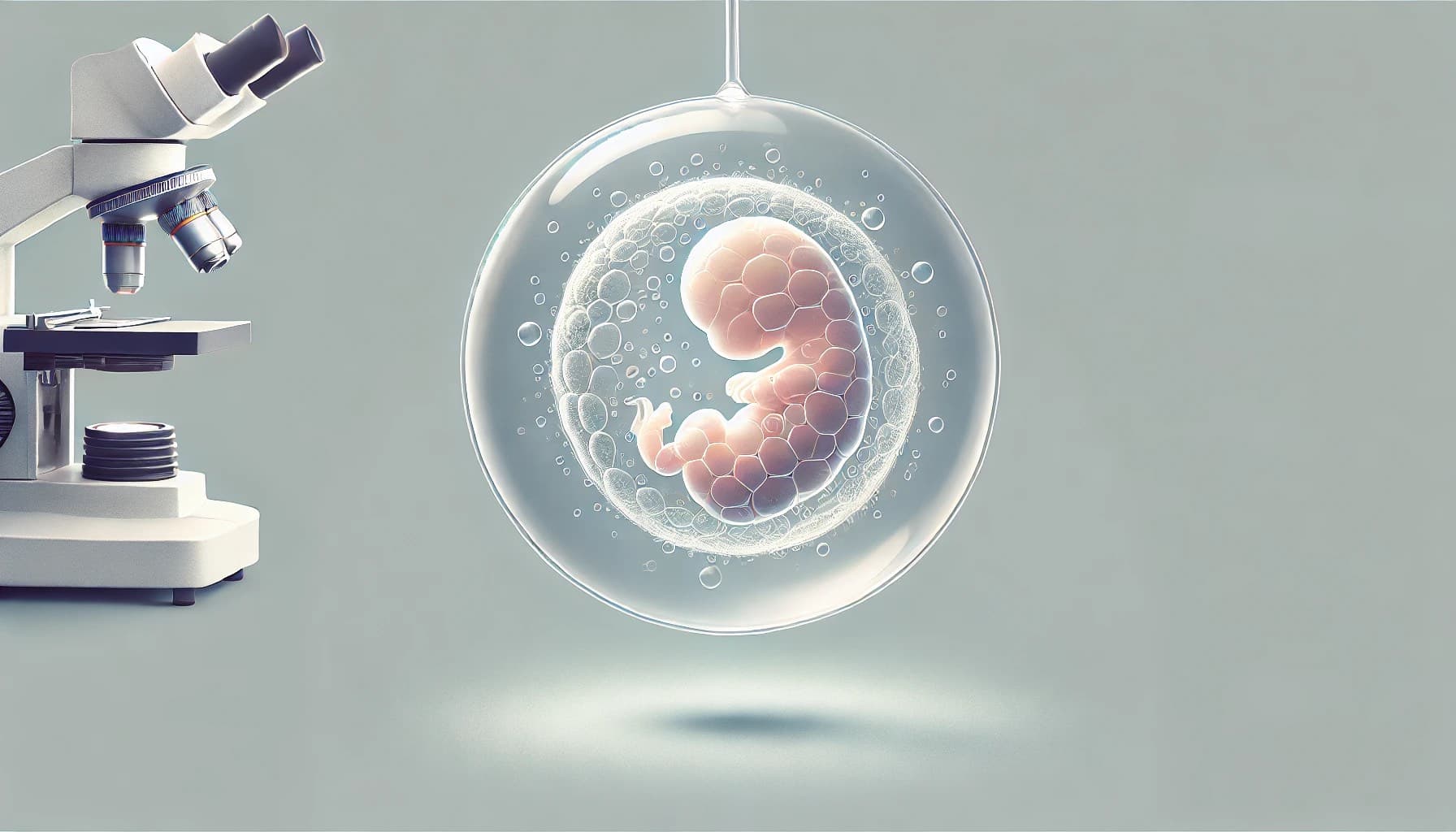
Embryo donation is a fertility treatment in which a high-quality embryo created during another patient’s IVF cycle is transferred to a woman or couple seeking to build a family. These embryos are usually cultured to day 5 (blastocyst stage), where implantation potential can be better evaluated.
Because blastocysts are further developed and more easily graded, they can increase the likelihood of pregnancy, if the clinic supplies consistently high-quality frozen embryos.
Why embryos become available for donation?
Most IVF patients use all embryos produced during their treatment. Only a small minority end up with surplus blastocysts and choose to donate them to an embryo bank.
Donation typically follows phenotype-based matching aligning the donor and recipient by characteristics such as:
- height
- eye colour
- hair colour and type
- skin complexion
- blood type
This alignment is recommended by international infertility guidelines to ensure secure, ethical matching.
Where do embryos for adoption come from?
Most embryos that can be designated for adoption (with the consent of the patients who own them) come from younger patients from whom a larger number of oocytes (eggs) can be retrieved. Usually, these are women up to 34 years old who are undergoing treatment for infertility.
Find the Right IVF Clinic Abroad
Get personalised clinic suggestions, cost clarity, donor options and next-step guidance before you contact clinics.
Embryos intended for adoption can also originate from egg donation programs. During such programs, statistically more embryos are created than in IVF programs using the patient’s own eggs.
| Type of Embryo Intended for Adoption | NOTES |
| Embryo obtained during patients’ treatment as a result of fertilizing the patient’s own eggs -with partner’s sperm or donor sperm | Embryo Donation |
| Embryo obtained during patients’ treatment as a result of fertilizing eggs obtained from a donor-with partner’s sperm or donor sperm | Embryo Donation |
| Embryo obtained as a result of fertilizing donor eggs – with donor sperm. Please note: Some clinics advertise this option as Embryo Donation | Double Donation |
Embryo donation or double donation?
Embryo donation and double donation are not the same treatment.
| Embryo donation | Double donation | |
|---|---|---|
| Embryo | Already exists and is donated | Created for treatment |
| Egg | From the genetic parents/donors of the existing embryo | Donor egg |
| Sperm | From the genetic parents/donors of the existing embryo | Donor sperm |
| Treatment cost | Usually lower | Usually higher |
| Availability | Depends on donated embryos | Depends on egg and sperm donor availability |
With double donation, a new embryo is created using both a donor egg and donor sperm.
Clinics can use different terminology, so patients should ask whether the programme involves an existing donated embryo or an embryo created through double donation.
Embryo donation abroad – The process
The process of embryo adoption in clinics abroad is not complicated. It can be divided into four stages, preceded by signing the necessary documents and paying the fee for the entire program:
- Selection of Embryos (based on blood type and visual characteristics of the donor and recipient)
- Preparation of the Recipient for embryo transfer
- Thawing of Embryos
- Transfer of Embryos into the uterus
Generally, clinics abroad have experience in organizing the treatment process for foreign patients in a way that minimizes the number of clinic visits-often to just one.
What happens if the embryo does not survive thawing?
This is an important question to ask before choosing an embryo-donation programme.
Not every frozen embryo will necessarily be suitable for transfer after thawing.
Ask the clinic:
- Is another donated embryo included?
- Would a replacement embryo involve an additional charge?
- How many embryos does the package provide access to?
- Does the programme guarantee a transfer or simply access to one embryo?
This can make two apparently similar packages financially very different.
Questions to ask before choosing a clinic for embryo donation
Before treatment, ask:
- Is this embryo donation or double donation?
- How did the embryo become available for donation?
- Which donor-identity rules apply?
- What information can I receive about its genetic origins?
- How are embryos matched?
- Are embryos currently available?
- What is the current waiting time?
- How many embryos are included?
- What happens if an embryo does not survive thawing?
- Is medication included?
- Is embryo transfer included?
- What would another transfer cost?
- What is the maximum treatment age?
- Am I legally eligible for treatment in this country?
Embryo donation in Europe – FAQ
Which European countries allow embryo donation?
Embryo donation is available in countries including Spain, Greece, Czechia, Portugal and Latvia, although eligibility and donor rules differ.
How much does embryo donation cost in Europe?
Private treatment prices generally range from approximately €2,000 to €6,000. Czechia and Portugal tend to be less expensive, while Greece is generally at the higher end of this price comparison.
Which country allows embryo donation over 50?
Greece permits medically assisted reproduction up to 54 years, with additional authorization required from 50 years and 1 day.
Spain does not establish a numerical statutory maximum age, although clinics apply their own medical age policies.
Portugal’s maximum female treatment age is 50, while Czechia’s limit is 49.
Is embryo donation anonymous in Europe?
It depends on the country.
- Spain and Czechia: anonymous donation.
- Portugal: donor-conceived adults can request identifying donor information.
- Greece: different donor-identity categories are possible following the 2022 legal reform.
Can a single woman receive embryo donation?
Single women can receive assisted reproduction in Spain, Greece, Portugal and Latvia, subject to the applicable treatment requirements. Czech law requires a woman and man to undergo assisted reproduction together.
Is embryo donation cheaper than double donation?
It often can be because a donated embryo already exists, while double donation involves creating embryos using donor eggs and donor sperm. However, clinic package contents differ, so actual prices should be compared individually.
Article sources:
- https://pmc.ncbi.nlm.nih.gov/articles/PMC7002185/
- https://fertilityeurope.eu/atlas2024/
- https://www.fertilityclinicsabroad.com/ivf-clinics-abroad/embryo-donation-costs-availability/
- https://ec.europa.eu/health/archive/ph_threats/human_substance/documents/tissues_frep_en.pdf
- https://esmed.org/MRA/mra/article/view/3070
- https://www.sciencedirect.com/topics/medicine-and-dentistry/embryo-donation
- https://www.ethikrat.org/fileadmin/Publikationen/Stellungnahmen/englisch/opinion-embryo-donation-embryo-adoption-and-parental-responsibility.pdf
- https://cne.news/article/4589-why-embryos-and-donor-sperm-remain-on-the-negotiating-table