CUBE IVF Prague, infertility centre from the Czech Republic was opened in 2011. EggDonationFriends have interviewed Dr. Hana Visnova, who is a medical director and owner of IVF CUBE. Dr. Visnova has more than 17 years of experience in the area of assisted reproduction.
EggDonationFriends know that patients love short, content-packed answers. That is why the interview below is a straightforward question-answer interview.
Question: What makes the Czech Republic stand out from other egg donation destinations?
Answer: Broad experience in the field of reproductive medicine, excellent standards of treatments at a reasonable cost. Advantageous location in Central Europe.
Question: What are the standards of treatment in the Czech Republic?
Answer: Infertility treatments in the Czech Republic are performed in accordance with EU Directives and guidelines of ASRM (American Society of Reproductive Medicine). The Czech Republic has strict implementation of EU Tissue and Cells Directive in comparison to other European countries to assure the highest quality of care and safety for our patients.
Question: Which countries do your international patients come from?
Answer: CUBE IVF Prague is visited by patients from many countries: Germany – 30%, Ireland – 30%, the UK – 20%, US – 8%, Italy – 4%, Norway, France, Netherlands, and other.
Question: Do patients expect treatment in their own language?
Answer: Yes, they do, in most cases.
Question: What percentage of international patients are treated in their own native language?
Answer: More than 95%
Question: What languages do your staff speak?
Answer: English, German, French, Italian, Russian, and Ukrainian.
Question: Which services do patients most frequently use at IVF CUBE?
Answer: Techniques of Assisted Reproduction including IVF ICSI, genetic testing of embryos, egg donation and sperm donation.
Question: How long do patients need to wait for donor eggs?
Answer: At IVF CUBE there is no waiting list.
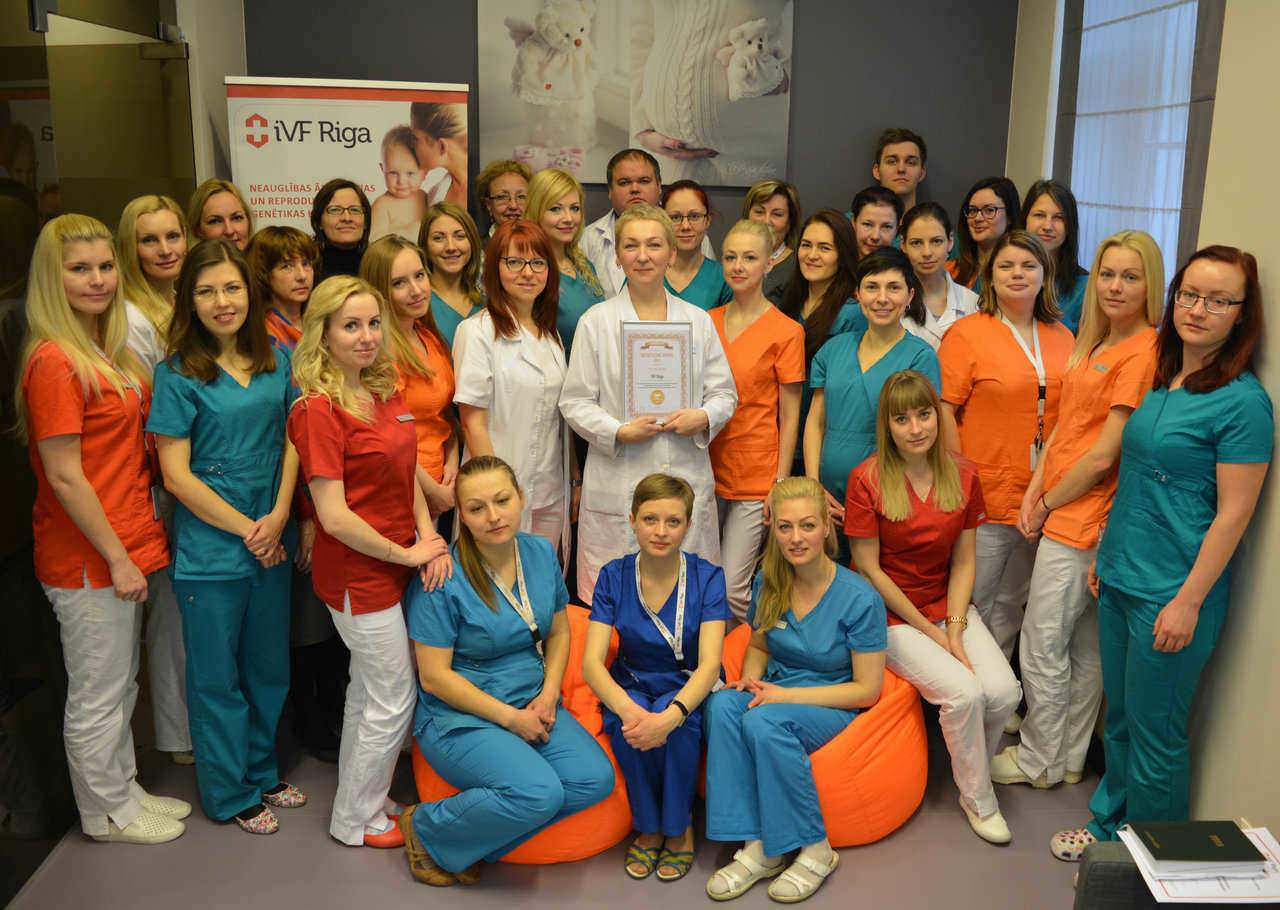
IVF CUBE interior
Treatment range
Question: Do you offer egg donation with fresh eggs?
Answer: Yes, we do.
Question: Do you offer egg donation with frozen eggs?
Answer: At IVF CUBE we prefer only fresh eggs to achieve higher pregnancy rates. Our fertility specialists use egg freezing only in rare cases.
Question: Do you offer IVF for single women?
Answer: No, we are only allowed to treat female-male couples. However, they do not have to be married.
Question: Do you offer IVF for same-sex parents?
Answer: Unfortunately not. As mentioned above, we are only allowed to treat heterosexual couples.
Question: Do you offer sex selection/family balancing?
Answer: No, this is not legal in the Czech Republic, despite X-linked diseases.
Question: Do you offer sperm donation?
Answer: Yes, we offer anonymous sperm donation.
Question: Do you offer embryo donation?
Answer: Yes.
Question: Do you offer surrogacy?
Answer: Yes, however, this procedure is limited to patients who have their own surrogate mother from their home country. We are not allowed to recruit surrogate mothers.
Question: Do you offer PGS?
Answer: Yes, we perform NGS.
Question: Do you offer PGD?
Answer: Yes, we do.
IVF CUBE, fertility clinic from Prague
Costs & success rates
Question: What do you think about the standard price of services provided in the Czech Republic, in comparison with other countries?
Answer: At IVF CUBE the IVF treatment cost is definitely lower in comparison to Germany, the UK or Spain, however, the quality of services is comparable.
Question: Is success rate data monitored? By whom?
Answer: Success rates and safety criteria are closely supervised by certain authorities on a yearly basis, namely SUKL and CIA. We take part in mandatory reporting to the National Registry of ART. The head of our laboratory is monitoring complexity of values at 6 month intervals.
Question: If so, how does this monitoring take place?
Answer: Mandatory reporting to National registry is performed online, SUKL as a licencing body of Czech Ministry of Health and CIA (Czech Accreditation Institute) carries out site inspections and interviews professionals on a yearly basis.
Question: What do you think about treatment success rates in the Czech Republic?
Answer: Average success rates in the Czech Republic are above standards. IVF CUBE benefits from more than 20 years of experience of our head gynaecologist and head embryologist.
Question: How do you think success rates might be improved?
Answer: At IVF CUBE we think infertility treatment should be tailored to individual needs and medical conditions of the patient together with close monitoring of embryos.
Law & legislations
Question: What laws regulate IVF treatment in the Czech Republic?
Answer: There are four regulations that are valid for each EU country.
Question: Are there any organisations monitoring IVF centres’ quality?
Answer: There is State Institute for Drug Control (the Czech Republic). Every IVF centre in our country has to have an authorisation to treat people, which is given by this institute. Besides the authorisation, our clinic has Certificate of Accreditation CSN EN ISO 15189:2007 and Certification no. 74/2016 from the Czech Accreditation Institute. Skills of medical doctors and laboratory personnel are examined according to rules of the Medical Chamber and Institute for Postgraduate Medical Education.
Question: Which procedures may be legally performed in the Czech Republic? (Please specify which are legal and which are not.)
Answer: Broad spectrum of infertility treatments such as IVF, ICSI, IUI including genetic testing of embryos. Egg donation, sperm donation and embryo donation are legal. Only anonymous donation is available. Gender selection is not allowed. Treatment is available only for heterosexual couples.
Question: Is the treatment legally limited by any factors? (e.g. female age, marital status, a max. no. of embryos transferred in one cycle, etc.)
Answer: Yes, there are, we are often contacted by single women, women over 49, or lesbian couples – however, we are only allowed to treat heterosexual couples and the woman’s age has to be max. 48. The max. number of embryos transferred according to the law is 3, but standard approach according to medical guidelines is max. 2 embryos for transfer. Open identity donation programmes are not allowed and not available. Commercial gestational surrogacy is not allowed.
Question: What laws regulate the donation of eggs? Please specify.
Answer: The one that I have already mentioned, the State Institute for Drug Control which, besides other activities, administrates surveillance over donation of human cells and all the procedures associated, and aims to guarantee their quality and safety.
Question: What are the rules of egg adoption for patients?
Answer: The rules for receiving egg donation treatment are the same as for any other treatment. The age of the woman cannot be over 48 and there needs to be a male-female couple to receive therapy. We also cannot treat patients that were diagnosed HIV positive.
Final thoughts
We have presented you with extensive information on IVF treatment in the Czech Republic. If you are interested in this clinic, contact IVF CUBE by hitting the Contact Clinic button in their clinic profile.
Aleksander Wiecki is Chief Marketing Officer of IVF Media and has worked in the fertility field since 2008, leading marketing and patient experience. He is Vice-Chair of the European Fertility Society, Chair of its Cross Border Reproductive Care Committee, and a member of ESHRE. Read full bio
Need help choosing an IVF clinic abroad?
Take 3 minutes to complete our Clinic Matching Test and save yourself hours of searching, comparing, and contacting clinics on your own. Tell us what matters most to you — your treatment type, destination preferences, expectations, and personal situation — and we will match you with 3 trusted IVF clinics abroad that fit your needs.
Our database includes only experienced fertility clinics that regularly support international patients and understand what matters during treatment abroad: clear communication, transparent information, patient care, and professional support.
The selected clinics will contact you directly within 3 working days, so you can compare your options and take the next step with more confidence.
IVF treatment abroad – how to choose a country? When choosing an egg donation clinic overseas you have to take a couple of things under consideration. The first and most important thing is the laws regarding infertility treatments in that specific country. So as soon as you know exactly what kind of procedures you need, […]
IVF CLINIC AWARD 2017 – iVF Riga – IVF Program
iVF Riga is a fertility clinic located in Latvia. It was established in 2013 and employs 15 physicians, 3 embryologists and 12 patient coordinators. The clinic is a member of many prestigious organizations like ESHRE, BFS, Latvian Society of Gynaecologists and Latvian Society of Human Reproduction, holds two ISO certificates and is a winner of […]
IVF Egg Donation – Step by Step
Egg donation process may vary between particular clinics and countries. Talk to your clinic consultant about all organizational aspects. The most standard procedure typically consists of steps below: Initial visits – they will be necessary to qualify you and your partner to the procedure; they usually include medical examination and all tests including sperm tests […]
Single Embryo Transfer After 40
As more women consider parenthood later in life, IVF decisions become more complex – and more personal. One of the biggest questions for patients over 35 is whether to transfer one embryo or two. While it may seem that transferring more embryos increases the chance of success, the reality – especially after 40 – is […]
The Journey of Egg Donation | Interview with Instituto Bernabeu
Making a decision to have an egg donation treatment abroad, instead of in your home country, should be preceded by thorough research into donor egg IVF abroad. Almost all European IVF centres (except the ones in Germany) offer in vitro treatment using donor oocytes. One of the most popular egg donation destinations is Spain which […]
Invimed Fertility Clinic Interview
Why seek treatment in Poland? What makes your country stand out from other medical destinations? The success rate of IVF is one of the first questions that arise when choosing a fertility clinic. In vitro procedures are expensive and if people are waiting to have a baby for a long time, they rightly want to […]
Double Donation in Spain-Success Rates and Benefits
The assisted reproduction process involves multiple techniques and treatments which, depending on each case, will be more or less appropriate. And the choice of the best one for each patient is up to the medical staff. In this sense, double donation has become a very valuable option in cases of couples or single people who […]
The Challenges of Artificial Intelligence in Fertility
The fertility industry owes a lot to science and technology; without both, people who could not have children would never have been able to fulfill their dream of becoming a parent. It is the constant progress of science that makes success rates grow year after year. We associate concepts like artificial intelligence with futuristic robotic […]