For patients preparing for IVF with donor eggs, one of the most common and emotionally significant questions is:
“Will the baby look like me?”
This concern is entirely understandable. Physical resemblance plays an important role in emotional bonding, self-identity, and how intended parents imagine their future family. For many women, particularly those travelling abroad for egg donation IVF, reassurance around donor matching is a key factor in choosing a clinic and country.
While IVF with donor eggs means the recipient does not contribute nuclear DNA, modern fertility clinics use a structured and carefully controlled process known as egg donor matching. This process is designed to ensure the closest possible physical and biological compatibility between donor and recipient, within the legal framework of each country.
Genetics, Appearance, and the Role of Phenotype Matching
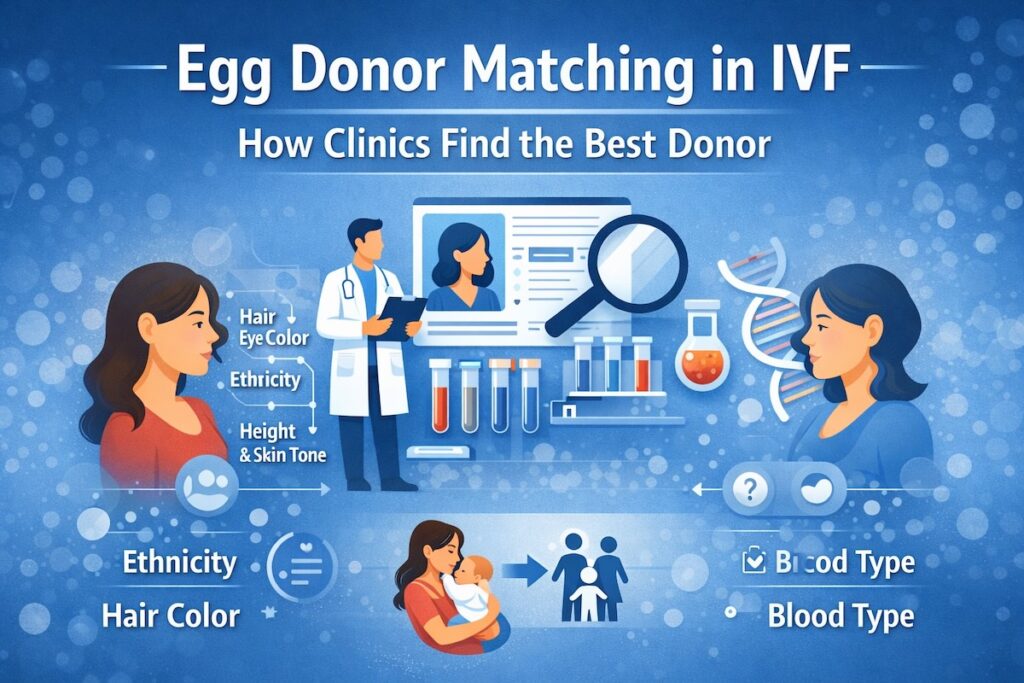
A child’s physical appearance is influenced by genetic material inherited from both the egg donor and the sperm source. Traits such as eye colour, hair colour, skin tone, facial structure, and body proportions are all shaped by genetic inheritance. In donor egg IVF, the recipient does not pass on nuclear DNA, but this does not mean clinics ignore resemblance.
This is where phenotype matching plays a central role. Phenotype matching is the process of selecting an egg donor whose observable physical characteristics closely resemble those of the intended mother. It is a well-established practice across IVF clinics in Europe and internationally.
Based on extensive clinical experience shared by embryologists and fertility doctors, phenotype matching significantly increases the likelihood that the child will resemble the intended mother. While no medical process can guarantee exact similarity, doctors consistently report that cases where parents feel the child looks “very different” are extremely rare when matching is done carefully and professionally.
You may be interested in reading: Will the Baby Look Like me? Donor Egg IVF Concerns
What Is Egg Donor Matching?
Egg donor matching is a structured medical and organisational process in which fertility clinics identify an egg donor whose physical, genetic, and medical profile aligns as closely as possible with the recipient’s characteristics and treatment needs.
In most European countries, egg donation is anonymous by law. This means that recipients do not browse donor profiles or make the final selection themselves. Instead, the responsibility lies with trained medical professionals – primarily embryologists and fertility doctors – who use clinical criteria, experience, and established protocols to identify the most suitable donor.
This approach removes pressure from patients and ensures that matching decisions are based on medical best practice, not subjective or emotional judgement.
Phenotype Matching (Appearance-Based Matching)
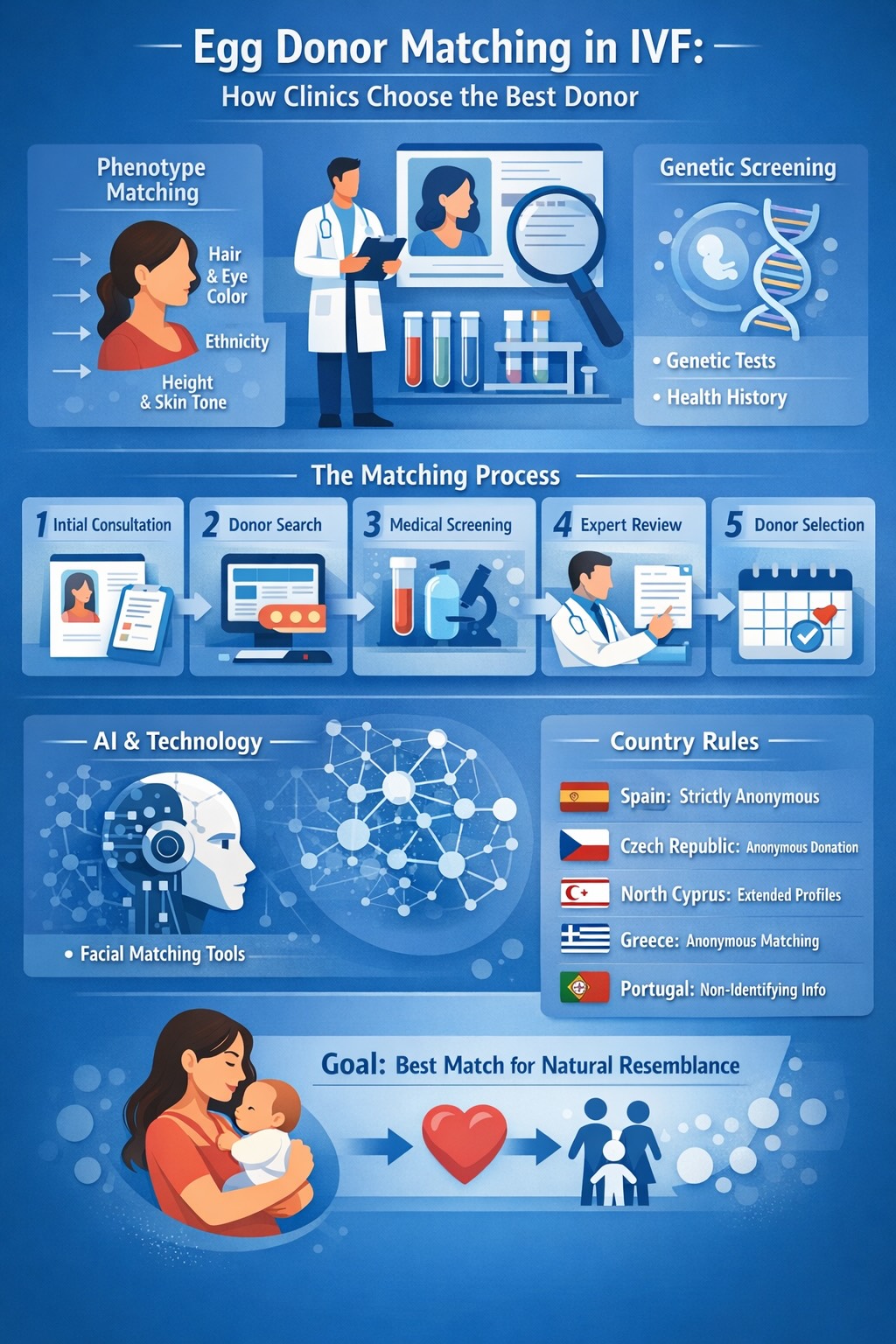
Phenotype matching focuses on aligning visible and externally recognisable traits between donor and recipient. Clinics typically consider: ethnicity or racial background, skin tone, height, eye colour, hair colour, hair texture, and overall body build. These characteristics are chosen because they are the most influential in how physical resemblance is perceived socially and within families.
Some clinics also consider blood group and Rh factor where possible. While blood type matching is no longer medically necessary for a healthy pregnancy, it may still be included as part of a comprehensive matching approach, particularly when the information is readily available.
The goal of phenotype matching is not perfection, but natural resemblance — ensuring that the child is likely to blend seamlessly into the family in terms of appearance.
Genetic Compatibility Matching
In addition to appearance, modern egg donation programmes place increasing emphasis on genetic compatibility. All egg donors undergo extensive medical and genetic screening, including carrier testing for inherited recessive conditions.
Clinics compare donor genetic screening results with the sperm source (partner or donor sperm) to minimise the risk of passing on genetic conditions. This step is essential for patient safety and long-term child health and is now considered a standard component of responsible donor egg IVF treatment. Genetic matching does not influence appearance, but it adds a crucial layer of medical security to the matching process.
How the Egg Donor Matching Process Works Step by Step
- Initial Contact and Information Collection
The donor matching process begins well before treatment starts. Once a patient contacts a clinic, they are typically asked to complete a detailed questionnaire covering medical history, physical characteristics, and personal background. Many clinics also request a recent photograph of the intended mother.
This information allows the clinic to build a clear phenotype profile, which becomes the foundation for donor selection. - Donor Database Filtering
Recipient data is entered into the clinic’s internal donor database. Embryologists filter available donors based on phenotype criteria, basic medical suitability, and availability. At this stage, donors who do not meet the core physical or medical requirements are automatically excluded. - Medical and Genetic Suitability Check
Only donors who have passed comprehensive screening are considered. This includes infectious disease testing, genetic carrier screening, psychological evaluation, and assessment of reproductive health. This step ensures that every potential donor meets strict safety and ethical standards. - Professional Review and Final Selection
Embryologists and fertility doctors review shortlisted donor profiles together. Their role is to assess the overall match — not just individual traits — and decide which donor offers the best balance of physical similarity, genetic safety, and treatment feasibility. - Optional AI-Assisted Support
Some clinics use AI-based donor matching tools to support embryologists, particularly when large donor databases are involved. These tools can analyse facial features and identify subtle similarities that may not be immediately obvious.
However, AI never replaces medical judgement. It serves only as a supportive technology, with final decisions always made by experienced professionals. - Donor Availability and Cycle Planning
Once a donor is selected, the clinic coordinates donor availability, treatment scheduling, and medication planning. This step ensures optimal timing for egg retrieval, fertilisation, and embryo transfer.
You may be interested in reading: IVF with Donor Eggs Abroad – The Step-by-Step Process Explained
AI in Egg Donor Matching: What It Can and Cannot Do
Artificial intelligence is increasingly used in reproductive medicine, including donor matching. AI tools can process large amounts of data quickly, helping clinics identify potential matches more efficiently when multiple donors meet the same criteria.
AI may highlight subtle facial similarities or patterns that support decision-making. However, it cannot evaluate emotional, cultural, or psychological aspects of matching, nor can it guarantee resemblance. For this reason, reputable clinics use AI cautiously and transparently, always under human supervision.
AI should be viewed as a technological assistant, not a decision-maker.
Spain
In Spain, egg donation is strictly anonymous by law. Donor identities are never disclosed, either to recipients or to children born from donation. Despite this, clinics internally perform detailed phenotype matching.
Recipients typically receive confirmation that the donor matches their physical characteristics and meets all medical and genetic screening requirements, without access to identifying details.
Czech Republic
Egg donation is also anonymous. Clinics provide reassurance that donors match the recipient’s phenotype and share non-identifying medical information. Donor identity remains protected at all times.
North Cyprus
While donation is anonymous in practice, clinics often provide more extensive non-identifying donor profiles. These may include physical characteristics, educational background, and fertility history, offering patients additional reassurance. The protocol may vary as per the clinic.
Greece
Greece follows an anonymous donation model – especially for international patients. Clinics share phenotype and medical screening information, ensuring compatibility while protecting donor privacy. According to Greek law, non-anonymous donations are possible; however, in practice, non-anonymous donors are rarely available.
Portugal
Portuguese clinics typically provide physical and background characteristics of donors. While regulations may differ slightly, donor identity remains protected, and matching is performed internally by the clinic. In Portugal, open-identity donation is regulated by law, meaning that a child conceived through donation may access the donor’s identity after turning 18.
How Long Does Egg Donor Matching Take?
The time required to find a suitable egg donor varies. Factors include donor availability, how common or rare a requested phenotype is, genetic compatibility requirements, and the size of the clinic’s donor pool.
In clinics with in-house egg banks and large donor databases, matching often takes weeks rather than months, which is one reason many patients choose IVF with donor eggs abroad.
Why Clinics Emphasise Counselling and Expectation Setting
Professional organisations such as ESHRE and ASRM stress the importance of patient counselling in donor egg IVF.
Clinics are encouraged to explain clearly how matching works, what resemblance can realistically be expected, and how genetics influence appearance. Proper counselling helps patients feel informed, confident, and emotionally prepared for treatment.
Why Patients Can Feel Reassured
Across reputable IVF clinics:
- Donor matching follows strict medical protocols
- Phenotype and genetic matching are standard practices, although genetic matching may involve an additional cost for the patient
- Decisions are made by experienced embryologists and doctors
- Long-term clinical experience supports high patient satisfaction
Egg donor matching is designed to support not only pregnancy success, but also emotional well-being and confidence in the treatment choice.
Egg donor matching is far more than a technical step in IVF. It is a carefully structured medical and emotional process designed to help intended parents feel secure, confident, and supported.
For patients considering IVF with donor eggs, understanding how matching works can significantly reduce anxiety and allow them to move forward with clarity and trust.
Further Reading & Medical Resources
• ESHRE – Guidelines on assisted reproduction and donor programmes
• ASRM – Practice Committee Opinions on donor egg IVF
• Human Reproduction, Fertility and Sterility – Peer-reviewed journals
• PubMed (NIH) – Medical research database
Need help choosing an IVF clinic abroad?
Spend just 3 minutes now and save yourself hours of searching later.
Take 3 minutes to complete our Clinic Matching Test and save yourself hours of searching, comparing, and contacting clinics on your own. Tell us what matters most to you — your treatment type, destination preferences, expectations, and personal situation — and we will match you with 3 trusted IVF clinics abroad that fit your needs. Our database includes only experienced fertility clinics that regularly support international patients and understand what matters during treatment abroad: clear communication, transparent information, patient care, and professional support. The selected clinics will contact you directly within 3 working days, so you can compare your options and take the next step with more confidence.

Table of Contents
- 1 Genetics, Appearance, and the Role of Phenotype Matching
- 2 What Is Egg Donor Matching?
- 3 How the Egg Donor Matching Process Works Step by Step
- 4 AI in Egg Donor Matching: What It Can and Cannot Do
- 5 What Donor Information Is Shared with Recipients? (By Country)
- 6 How Long Does Egg Donor Matching Take?
- 7 Why Clinics Emphasise Counselling and Expectation Setting